
Here’s your ideal path forward when starting with a fresh idea.
This path is for teams that have a bold goal or vision, but haven’t yet clarified the problem, explored the data, or aligned on where to start.
All teams begin with the Warm-Up to build and confirm Sprint readiness. Based on your starting point, we recommend the Warm-Up Path below to build an evidence-based foundation before sprinting.
Step 1a: Understanding the Warm-Up
The Warm-Up establishes an evidence-based foundation before a high-impact Sprint. Across two sessions, teams build a shared understanding of the current landscape, investigate priority problems, and identify the world-class targets their work can meaningfully advance in 90 days.
1. Why do we Warm-Up before launching a Sprint?
Before taking action, teams need a strong foundation. The Warm-Up helps you understand what’s shaping your outcome, including the most constricting problems, what the data say, and who else is working in this space.
In EpicJax®, the defined problem explains why an Unreasonable Idea feels so hard to achieve. The Warm-Up makes progress possible by identifying what’s standing in the way and what teams can realistically address within their authority and scope.
2. How do I prepare for a Warm-Up?
Preparing for a Warm-Up is about getting the right people and knowledge together so your team can learn, validate, and prepare before sprinting forward.
Here’s everything you need to run your own Warm-Up:
- Determine your starting point
Teams use the Warm-Up differently depending on where they’re starting.
If little or no work has begun, you will likely run both Warm-Up sessions in sequence.If work is already underway, you may condense or customize the Warm-Up into 1-2 Alignment Sessions.
- Identify a facilitator or project lead
You’ll need at least one person to coordinate and lead the sessions. This may be a project manager, facilitator, and/or internal leader who can guide discussion and keep the group focused on the outcome. - Invite the right people to your sessions
Invite those who will help your team target the problem that is blocking your Unreasonable Idea and map out the plan to tackle it. This includes:- Leaders or partners with direct influence or decision-making authority
- Subject matter experts who can meaningfully contribute knowledge, effort, or resources
- Prepare what’s known
Gather any relevant research, data, or insights available. The Warm-Up helps your team build shared understanding from what’s already known and surface what’s missing. - Use the Playbook
The Warm-Up Sessions page has everything you need to run your own Warm-Up, including session agendas and facilitator guides.If questions come up or your team needs support, contact epic@jaxciviccouncil.com.
3. How do I know when I’m ready to Sprint?
You’re ready to move from the Warm-Up into a Sprint when your team can answer a few key questions with confidence:
- What problem are we addressing?
- Why does this problem matter? What does the data say?
- Who else is working on this?
- What can we realistically address and influence?
- What does success look like for the Sprint phase?
The Warm-Up helps your team answer these questions and clarify what’s still missing before moving forward. When your team is aligned and the direction is clear, you’re ready to Sprint.
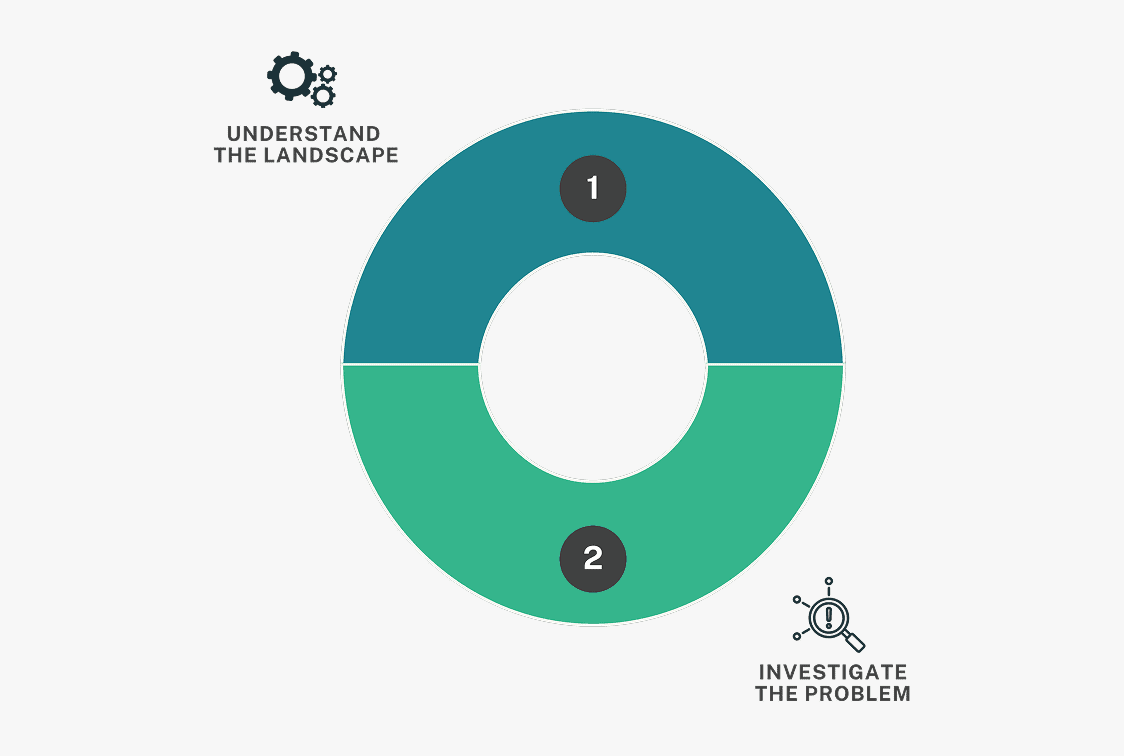
Step 1b: Conduct Warm-Up Sessions
Session 1: Understand the Landscape
Run this session if work on your Unreasonable Idea is just beginning and your team needs shared context before narrowing focus.
Purpose: Build a shared, evidence-based understanding of the current landscape and identify 1–2 priority problems that most limit progress toward the outcome.
Session 2: Investigate the Problem
Run this session if your team understands the landscape and has identified evidence-based priority problems, and now needs to decide which one to tackle first.
Purpose: Deepen understanding of the selected priority problem(s) by investigating root causes and assessing which are feasible and high-impact entry points for a future Sprint.
Alignment Session (for Advanced teams)
Run this session if work is already underway and your team needs to confirm alignment on the problem, evidence, and focus before sprinting.
Purpose: Offer a condensed option for teams with foundational work in place to confirm alignment on the problem, the supporting data, the broader landscape, and the specific focus of a 90-day Sprint.
Sprint Product Workshop (Optional)
Run this session if your team has defined the problem and needs support generating or expanding bold solutions to drive the Sprint.
Purpose: Translate the selected priority problem into one tangible Sprint Product that can be designed, built, and prepared for activation within 90 days.
Step 2a: Understanding Sprints
A 90-day Sprint is a focused period of work designed to advance an Unreasonable Idea—the ambitious, long-term goal your team is working toward.
Rather than trying to achieve the full Unreasonable Idea at once, a Sprint breaks that goal into one clear, time-bound outcome that can be meaningfully advanced in 90 days.
By the end of the Sprint, the goal is to make tangible progress toward the Unreasonable Idea, test what’s possible, and secure the partners, resources, or decisions needed to continue the work.
The 90-day Sprint framework was developed and refined through iterative EpicJax® pilots. Now, it is shared as a practical, repeatable model leaders can apply across civic and organizational challenges.
1. What does a Sprint produce?
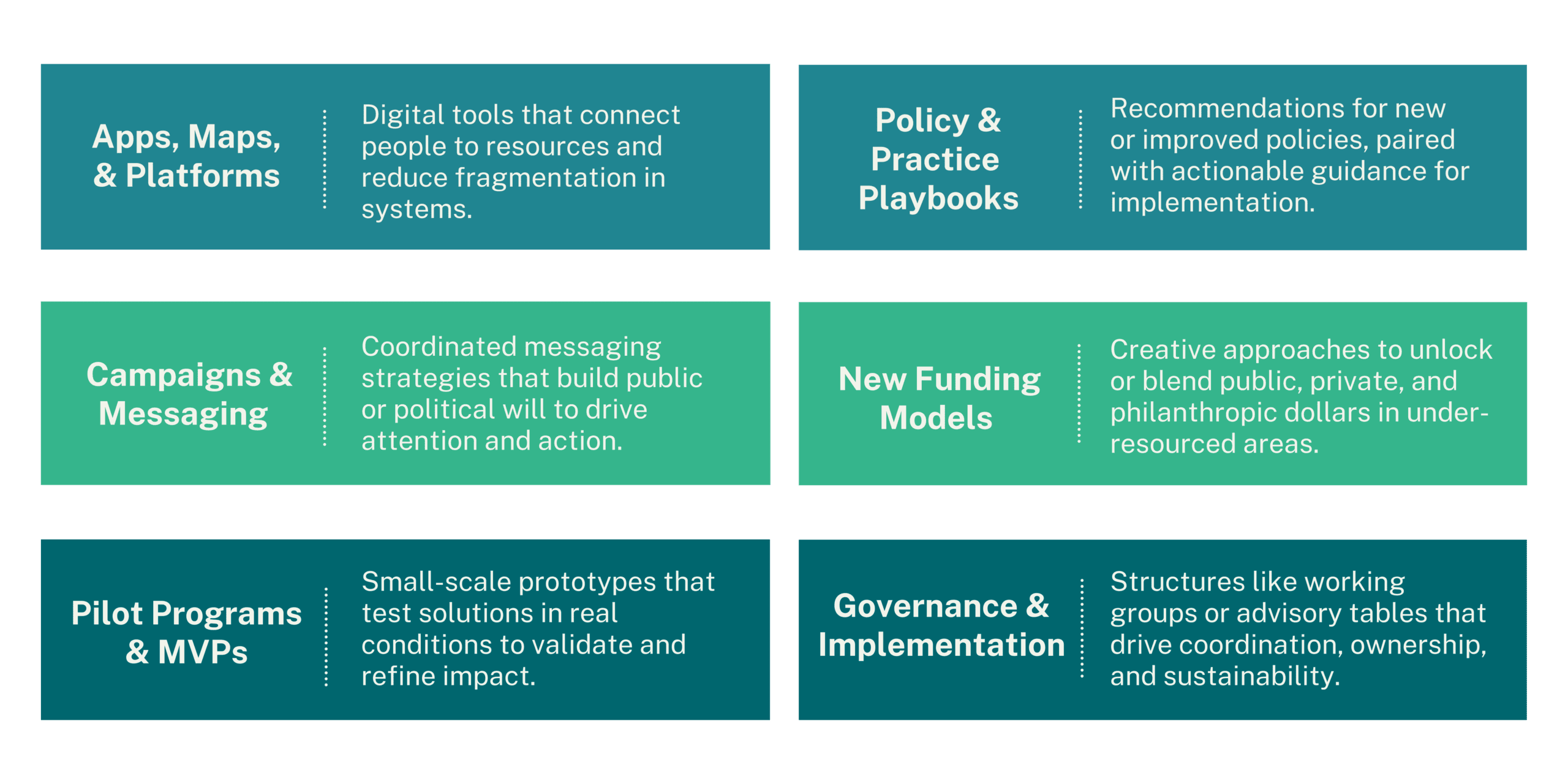
Every Sprint builds and delivers a product that advances the Unreasonable Idea and addresses a key community challenge or need.
The Sprint Product Menu above shows common types of deliverables that teams produce during a Sprint. Across all product types, the goal is the same: to leave the Sprint with something real that can be tested, implemented, or built upon.
2. Am I ready to launch a Sprint?
You’re ready to launch a 90-Day Sprint once your team has completed at least one Warm-Up session and has enough clarity to move from planning into action.
Use the Sprint Criteria below to assess Sprint readiness or shape an idea into a strong candidate for the process. Sprints work best when the challenge is action-ready, time-bound, and capable of producing real progress in 90 days.
- If your idea clearly fits the criteria, you’re ready to Sprint.
- If your idea still needs focus, shaping, or alignment, another targeted Warm-Up session may help.
- If your idea isn’t a fit yet, consider if it might be better suited for longer-term research or advocacy.

3. What makes an Epic Sprint Team?
Sprints succeed when the right people come together with the right mix of leadership, execution, and shared commitments for how the work gets done.
Detailed guidance on Sprint roles and responsibilities is available in the Sprint Roles Guide.
Epic People – Who is needed on the team?
- Sprint Lead (1–2 people)
Project managers who oversee the Unreasonable Plan, guide the process, and keep the team focused on the outcome. This is often the person using the Playbook. - Quarterbacks (1–2 people)
Leaders who hold the vision, set direction, and help the team make decisions and remove barriers. - Sprint Team (3+ people)
The core group who builds the Sprint product and moves the work forward each week. - Sprint Advisors (as needed)
Subject-matter experts or invested partners who provide insight at key moments, without participating week to week.
If you need help identifying or engaging Advisors, the Civic Council may be able to help. Contact epic@jaxciviccouncil.com.
Epic Commitments – How do we show up together?
- All Players, No Spectators
Everyone involved contributes meaningfully to the work.
- Progress Over Perfection
The goal is forward movement and learning, not flawless execution. - Be Unreasonable, With Evidence
Big ambition is grounded in data, shared understanding, and lived experiences.
Step 2b: Build Your Unreasonable Plan
An Unreasonable Plan is the working project plan that guides your team through a 90-day Sprint.
It translates an Unreasonable Idea—the big, long-term goal—into a clear 90-day outcome, defined tasks, and a realistic timeline for action.
The Project Manager creates and maintains the plan and uses it to keep the team focused and on track. The plan’s purpose is to provide enough clarity to begin and improve as the Sprint progresses. It is a living document that evolves as the team learns.
What goes into an Unreasonable Plan?
An Unreasonable Plan should be simple, clear, and actionable. At a minimum, it includes:
- The Unreasonable Idea
The ambitious, long-term goal your team is working toward. This is your overall north star, not what you expect to complete in 90 days. - The Problem + Existing Data
A clear description of the problem you’re addressing, supported by relevant data, research, or insight you already have access to. - The Sprint Product + 90-Day Outcome
One specific outcome your team will focus on during the Sprint. This should result in a tangible product or deliverable by the end of 90 days. - The 90-Day Timeline
A high-level plan for how the team will use the 90 days to design, build, and prepare to implement the Sprint product.
How do I plan the 90 days?
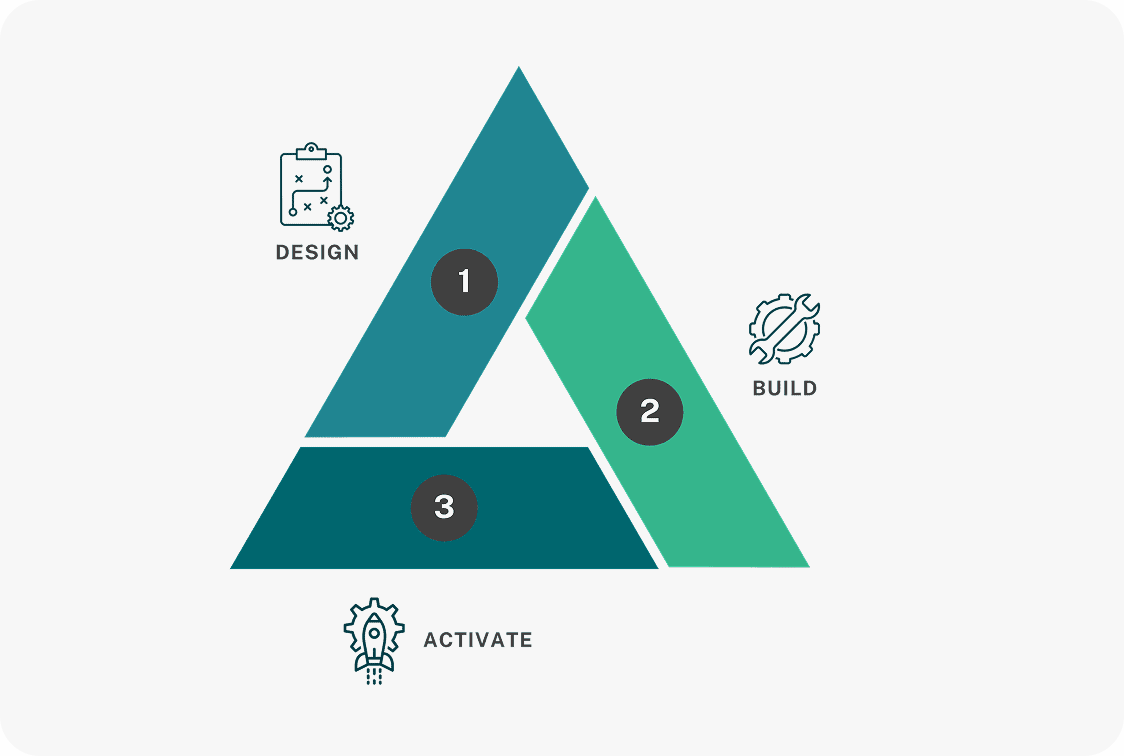
Sprint timelines follow a general three-phase rhythm: Design, Build, and Activate. These phases are divided into 30-day segments and help teams sequence work so decisions come before building, and building comes before implementation.
Explore the graphic below to learn about each phase. Along with the Unreasonable Plan Template, this rhythm will guide your team in developing your own timeline to advance your outcome.
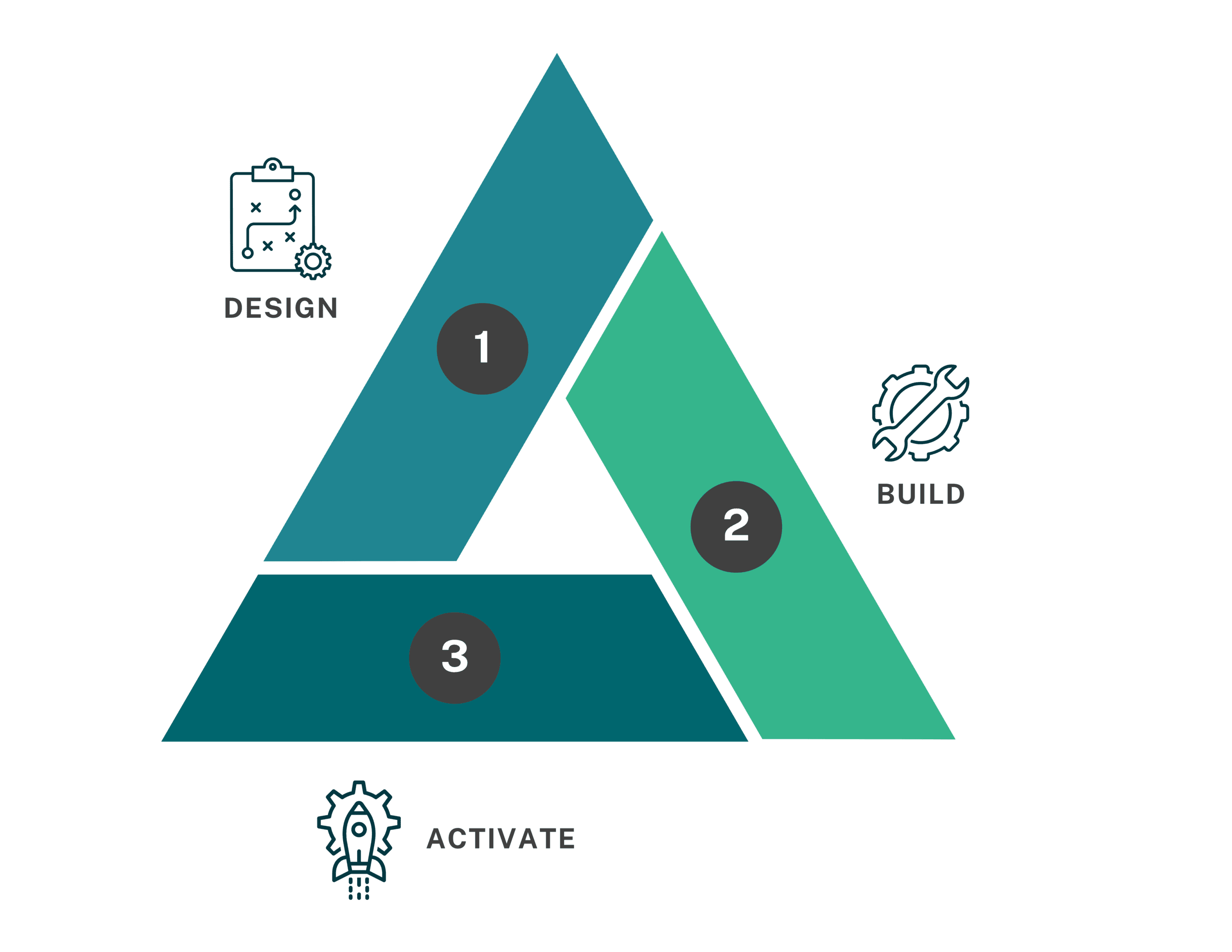
Design | Day 0–30
Teams collaboratively define the goals, structure, and success indicators of the Sprint. This includes defining targets, outlining key partnerships and resources, and creating a plan to guide development and execution of the Sprint product.
Common tasks include:
- Defining success and scope
- Gathering key research and data
- Mapping users, stakeholders, or systems
- Making key decisions before building
Build | Day 31–60
Teams develop key components of the Sprint product, gather insights from stakeholders, and pressure-test ideas in real-world conditions. This phase focuses on strengthening the solution and finalizing what’s needed for a successful launch.
Common tasks include:
- Developing or testing the product
- Gathering and refining based on feedback or data
- Piloting ideas or components
- Preparing materials, tools, or processes
Activate | Day 61–90
Teams finalize the implementation strategy, secure partner and resource commitments, and troubleshoot barriers to execution. By the end of this phase, the Sprint product is ready to move from concept to action, with a clear plan for measuring impact and determining next steps.
Common tasks include:
- Preparing for launch or handoff
- Securing partners, approvals, or resources
- Finalizing presentation, documentation, or playbooks
- Positioning the work for continuation or scale
How do I manage the Sprint?
The Sprint Lead uses the Unreasonable Plan to guide the team’s work throughout the 90 days.
The plan defines what needs to be accomplished by each 30-Day Timeout. Each week, the team looks ahead to the next checkpoint and decides what needs to happen now to stay on track.
In practice, this means:
- Reviewing what must be ready by the next 30-day milestone
- Breaking that work into weekly priorities or tasks
- Sequencing tasks so earlier work enables what comes next
For example, if the next Timeout requires draft visuals for stakeholder review, weekly work might include outlining content first, gathering information next, and then creating the visuals before the checkpoint.
Most teams manage this work in a shared digital space. We recommend Asana or another project management platform where the team can:
- View the Unreasonable Plan
- Track weekly tasks and priorities
- Share updates, materials, and decisions as the work progresses
Teams using Asana can reference the Asana Guide for recommended setup and best practices.

Step 2c: Run Your Sprint Sessions
Sprint Kick-Off
The Sprint Kickoff is the official launch of the 90-Day Sprint. Its purpose is to align the team, confirm the Unreasonable Plan, and set up everything needed to begin work in Week 1.
During the Kickoff, the team will:
- Align on the Unreasonable Plan
- Confirm the Sprint timeline and phase focus
- Clarify roles and expectations
- Set up the team’s working space
Team Huddles (weekly)
Team Huddles are weekly check-ins that are efficient and action-oriented. Usually lasting about 30 minutes, Huddles help teams track progress, address issues early, and make intentional choices about where to focus next.
During a Team Huddle, the team will:
- Review progress on weekly tasks
- Address any stuck points or blockers
- Align on priorities and roles for the next week
Typically, the Sprint Lead and Quarterbacks meet for at least 15 minutes before the full Team Huddle to review the agenda and confirm direction.
30- & 60-Day Timeouts (monthly)
Timeouts are monthly checkpoints that bring together the full Sprint Team, Advisors, and key stakeholders to review progress, assess what’s been accomplished, and prepare for the next phase of work.
During a Timeout, the team will:
- Review the 30-Day Deliverable and progress on the 90-Day Outcome
- Surface key learnings, feedback, and challenges
- Decide what to adjust, refine, or double down on next
- Confirm priorities and direction for the upcoming phase
90-Day Touchdown
The Touchdown marks the conclusion of the 90-Day Sprint. Its purpose is to share what the team built, confirm how the work will continue, and formally close out the Sprint.
During the Touchdown, the team will:
- Present the Sprint product
- Share key learnings from the 90 days
- Confirm next steps for implementation, ownership, or continuation
- Acknowledge the work and contributions that made the Sprint possible

Step 3: Assess What's Next
1. What is the right next step after a Sprint?
What comes next depends on what the Sprint produced and what’s needed to keep the Unreasonable Idea moving forward.
Many teams move straight into implementing their Sprint product after the 90 days, especially when Phase 3 already defined the plan for next steps, roles, and decisions. In those cases, the work may continue without regular meetings, using light check-ins such as weekly updates until implementation is complete.
Other teams choose to take a short pause after the Sprint to rest, reflect, and prepare for what comes next before regrouping.
EpicJax® recommends scheduling a check-in once that next phase concludes, often about 30 days later, to regroup and decide what comes next:
Run another 90-day Sprint → Use this when there is a clear next outcome that is urgent, focused, and within the team’s ability to influence.
Hand the work off to a partner or team → Choose this when the next phase requires different ownership, capacity, or expertise.
Close the effort → If the Unreasonable Idea has been achieved or the work is complete, formally close the Sprint and capture impact and learnings.
2. How do I measure Sprint impact?
Sprint impact comes down to two questions:
- Did the Sprint meaningfully advance the outcome you set out to move in 90 days?
- Did that progress support Jacksonville’s path toward becoming a world-class city?
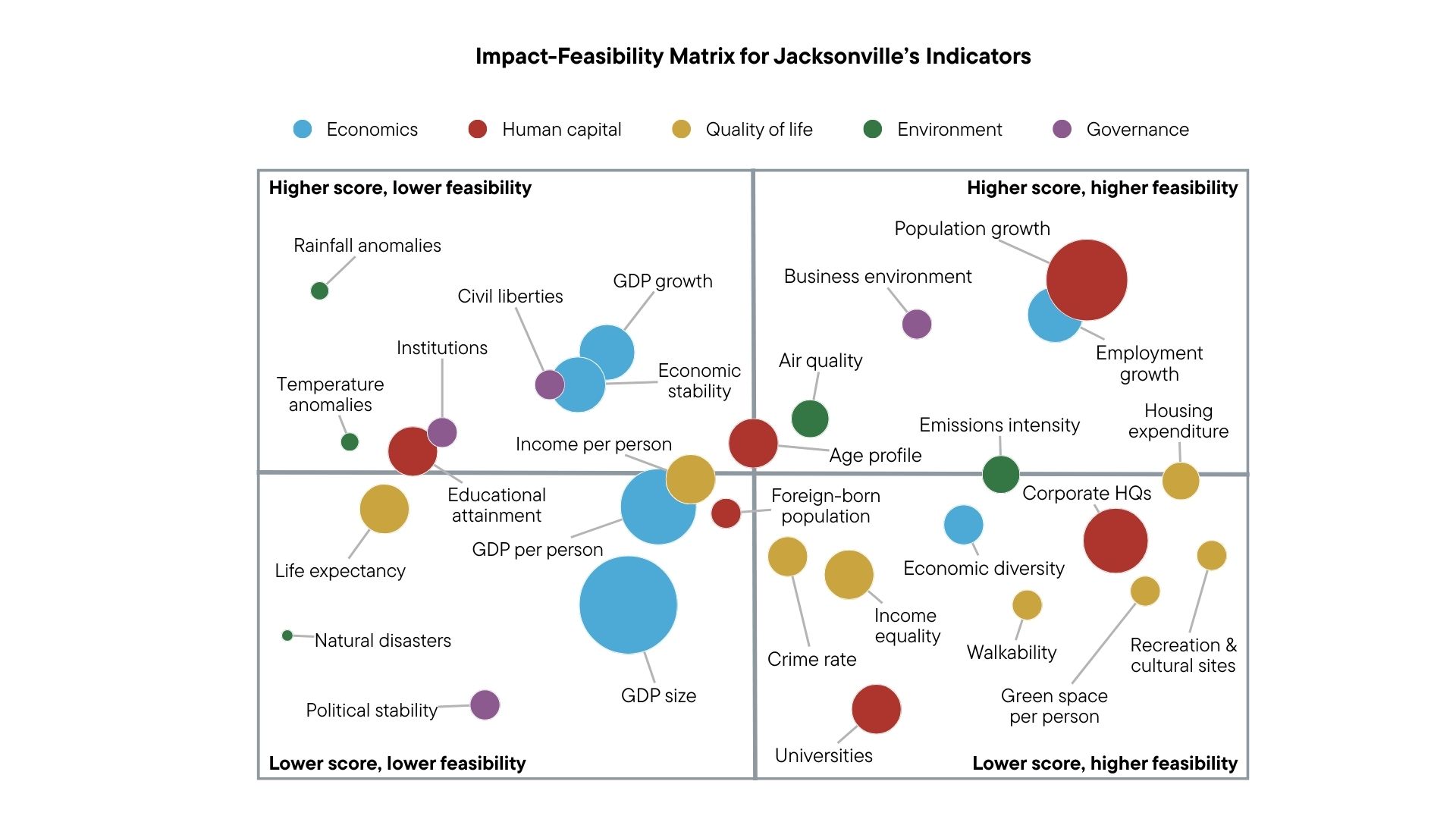
EpicJax® uses the Oxford Economics Global Cities Index as Jacksonville’s long-term benchmark. Oxford’s Indicator List and the Civic Council’s Impact-Feasibility Matrix help teams understand how their work aligns with world-class progress and whether a Sprint is targeting a high-leverage indicator or contributing to longer-term structural change.
As part of the Unreasonable Plan, teams are asked to define their world-class targets by naming:
- The Unreasonable Idea (the long-term ambition)
- The 90-Day Outcome and Sprint Product
- 1–2 Oxford pillars the work supports and how the Sprint contributes to progress on related indicators
Teams are not expected to move an Oxford indicator in 90 days. Instead, Sprints often surface other meaningful signals of progress through the work, such as stronger participation, new partnerships, readiness to implement, early results, improved perception, or clearer decisions. These signals should be captured during post-Sprint reflection and used to guide what comes next.
3. What if a Sprint doesn’t go as planned?
It never will, and that’s a good thing. EpicJax® is built on the principle of fail fast, learn faster. Not every Sprint will land exactly where teams expect, but every Sprint produces insight, clarity, and momentum that would not have existed otherwise.
Even when outcomes shift or plans change, teams consistently gain:
- A deeper shared understanding of the problem
- Stronger alignment across organizations, departments, and roles
- Clearer signals about what works, what doesn’t, and what to try next
EpicJax® itself was developed through iteration, learning, and course correction. What we’ve learned is embedded in the process, designed to help teams learn quickly, adapt strategically, and keep moving forward together.
Often, the most valuable outcome of a Sprint is the collaboration itself. Shared mission, teamwork, and community problem-solving create a foundation that makes future progress faster, stronger, and unreasonably epic.